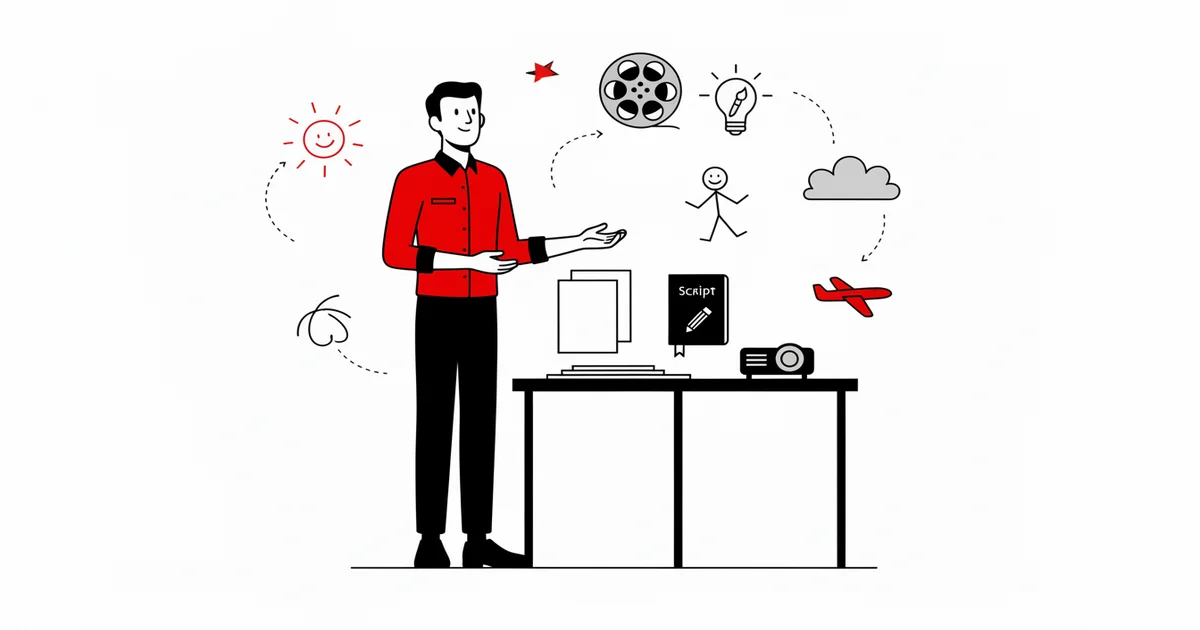
Between 2007 and 2017, I ran animation and mini-game workshops at SESC units in Rio de Janeiro, coordinated digital culture at Pontão Arroios (the Cinema Nosso NGO) and at the Rio Solidário project (Cidadela Arte e Cultura NGO). A decade later, I still carry a lesson from those rooms: teaching art is not transmitting technique — it is creating together. And whoever creates together learns twice.
What the workshop room teaches that the studio does not
In the studio, deadlines rule. The direction call is mine, and the client approves or not. In the workshop, the picture changes: the student arrives asking for nothing, not knowing what to expect, and the first question is always “what do I do?”. What works there is not explaining better — it is doing it together, in front of them, with them holding the pencil.
Art education has a quality that commercial production does not: the process is the result. An animation made by a 10-year-old in three hours will not reach any festival, but it taught that child to see the world at 12 frames per second. It is hard to explain the value of that to someone who has never been in the room.
The dilemma that History helps to understand
There is an old tension between teaching technique and freeing expression. It is not new: the debate about the dilemmas of art-education practice has followed the field since school began taking art seriously as a discipline — which History helps to explain, and practice demands every day.[1]
In my experience, the path is not choosing a side. It is alternating: sometimes the student copies a movement to understand timing, sometimes they invent from scratch to discover their own hand. Technique without expression becomes an exercise; expression without technique becomes noise. The two need to meet — and it is in that meeting that the workshop happens.
What I do differently today
Ten years of workshops changed how I teach — and also how I create. Three things stayed:
1. Start with “what happens if…”. Instead of opening with squash and stretch theory, I open with a question: “what if the character had no legs?”. Doubt creates the need for technique — the student looks for the answer because they want to, not because they must.
2. Work with the tool the student has. In 2010, it was pencil and paper. Today it is Fonte, Blender and free software — because the student can take it home and keep going. A tool a person cannot own teaches nothing.
3. Treat error as material. In the workshop, a frame that came out crooked is not a mistake — it is proof someone tried. Showing the error and fixing it together teaches more than a perfect lesson.
Why this matters for anyone producing
This experience is not nostalgia. It directly affects how I work with those who hire: cultural projects, grants, schools. When a project asks for a workshop or training, I do not deliver “an animation lesson” — I deliver the process I learned to build in ten years in the classroom. It is the same logic as my production process: research, method and people at the center, before the drawing.
There is also a side that is often ignored: education is where digital sovereignty is decided. A child who learns to animate with free software grows up finding it natural to own the tool of their own work. That is worth more than any speech.
Frequently asked questions
What is SESC?
SESC (Serviço Social do Comércio) is a Brazilian institution that runs cultural, educational and health activities across the country. In Rio de Janeiro, its units offer workshops, courses and arts events — it is where I taught animation and mini-game workshops between 2007 and 2017.
What is Cinema Nosso?
Cinema Nosso is a Rio-based NGO that provides audiovisual training for young people from communities. I worked as digital culture coordinator at Pontão Arroios, the institution’s digital culture branch, between 2015 and 2017.
Do animation workshops work for children?
Yes, they work very well. Animation requires three things children have in abundance: imagination, patience for detail and a desire to tell stories. The challenge is structuring time and technique without suffocating creation.
How do you use art in education?
Art in education is not a class decoration. It is a way for children to build thinking: plan, execute, make mistakes, redo. In my experience, short workshops with a visible goal (a 30-second film, a mini-game) work better than long abstract courses.
How much does it cost to bring an animation workshop to a school?
It depends on the format: a one-day workshop, a one-month course or a cultural project with a grant. Each case is a different design. For cultural projects and schools, get in touch and we will build the proposal together.
References
- Subtil, M. J. D. (2009) Educação e arte: dilemas da prática que a História pode explicar. Praxis Educativa, 4(2), 185-194. DOI: https://doi.org/10.5212/praxeduc.v.4i2.185194
- Graça, R. A. B. — practical experience as educator and art-educator in animation and digital culture workshops at SESC, Cinema Nosso and Cidadela (2007-2017).
— Ricardo A. B. Graça · ricolandia.com